A Grateful Heart(h)

Reflections on a Farm Thanksgiving

blackandwhitekarina.jpbby Laura Parker Roerden

A few things we are grateful for:

The long shadows of late fall, which ask us to look at things differently.eggshadow03

~~~~~~~~~~~~~~~~~~

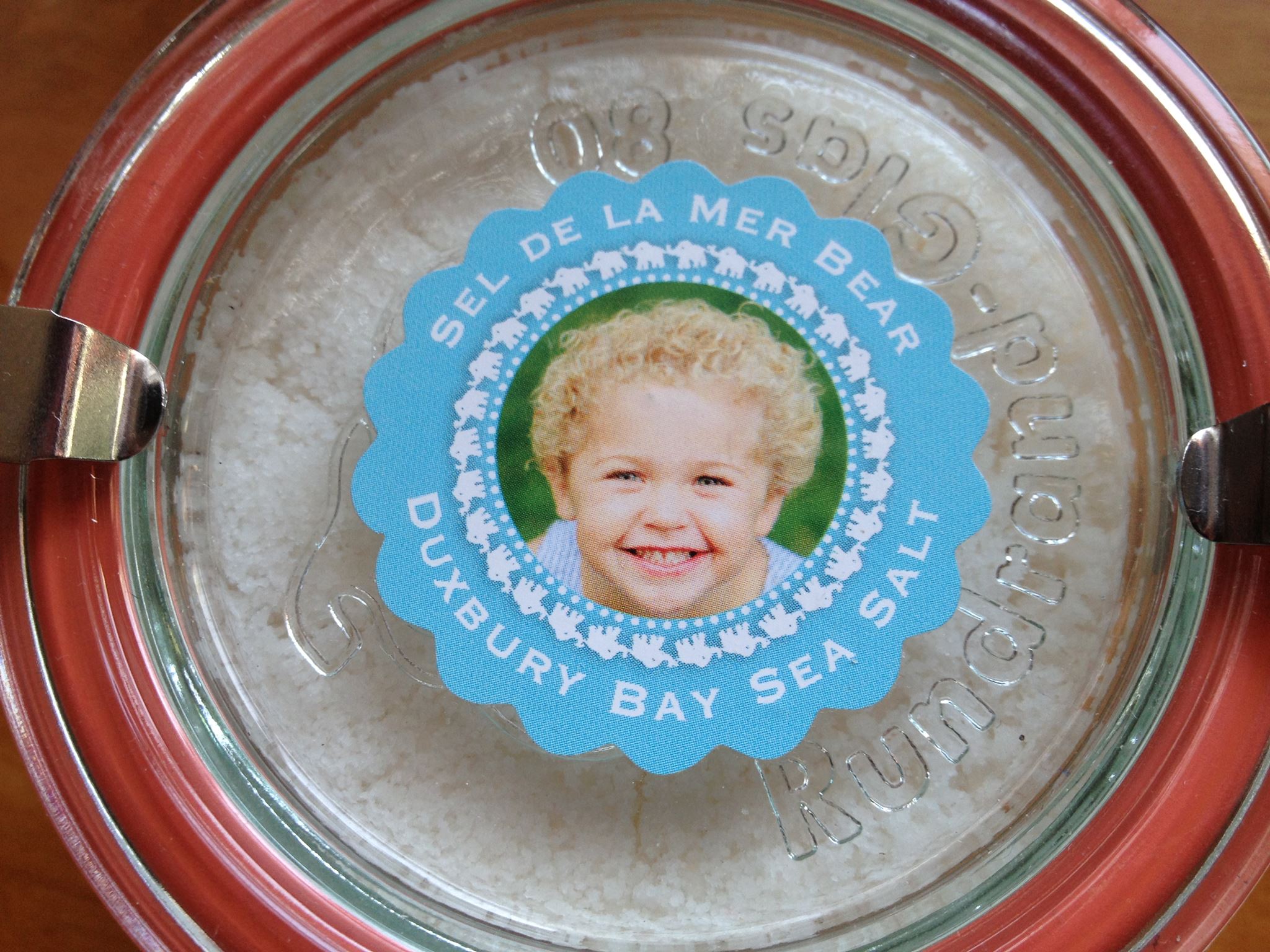
We sometimes come home to find handmade gifts from customers—from Richard McCaffrey’s delicious cookies, to home dried sea salt, to preserves and the apron Brenda Marshall made for me for egg collecting. Feeding others is like a long handshake with people you come to care deeply about.

Mersalt

~~~~~~~~~~~~~~~~~~

That chickens can turn table scraps back into food.


chickenseatingtoms

~~~~~~~~~~~~~~~~~~

That dirt and poop coexist with the more gentile and lovely aspects of living is no surprise to most people. But to intimately know how things that nurture us are created by the unsavory outputs of living can change your life view.

threecows

~~~~~~~~~~~~~~~~~~

Hands long-gone have left barns, stonewalls, manure buckets and other gifts that keep giving.

IMG_9229

~~~~~~~~~~~~~~~~~~

The chickens roost at about my head height in our coop. Their disembodied sounds in the dark form a line on both of my sides, which helps me to navigate the dark shoals of the room the way ancient mariner might have used the sound of a particular bird in a fog to know they were closing in on land.

~~~~~~~~~~~~~~~~~~

Hidden treasures such as this clutch of eggs found in an un-used barn remind us that our blessings sometimes go unclaimed.


hiddeneggs

~~~~~~~~~~~~~~~~~~

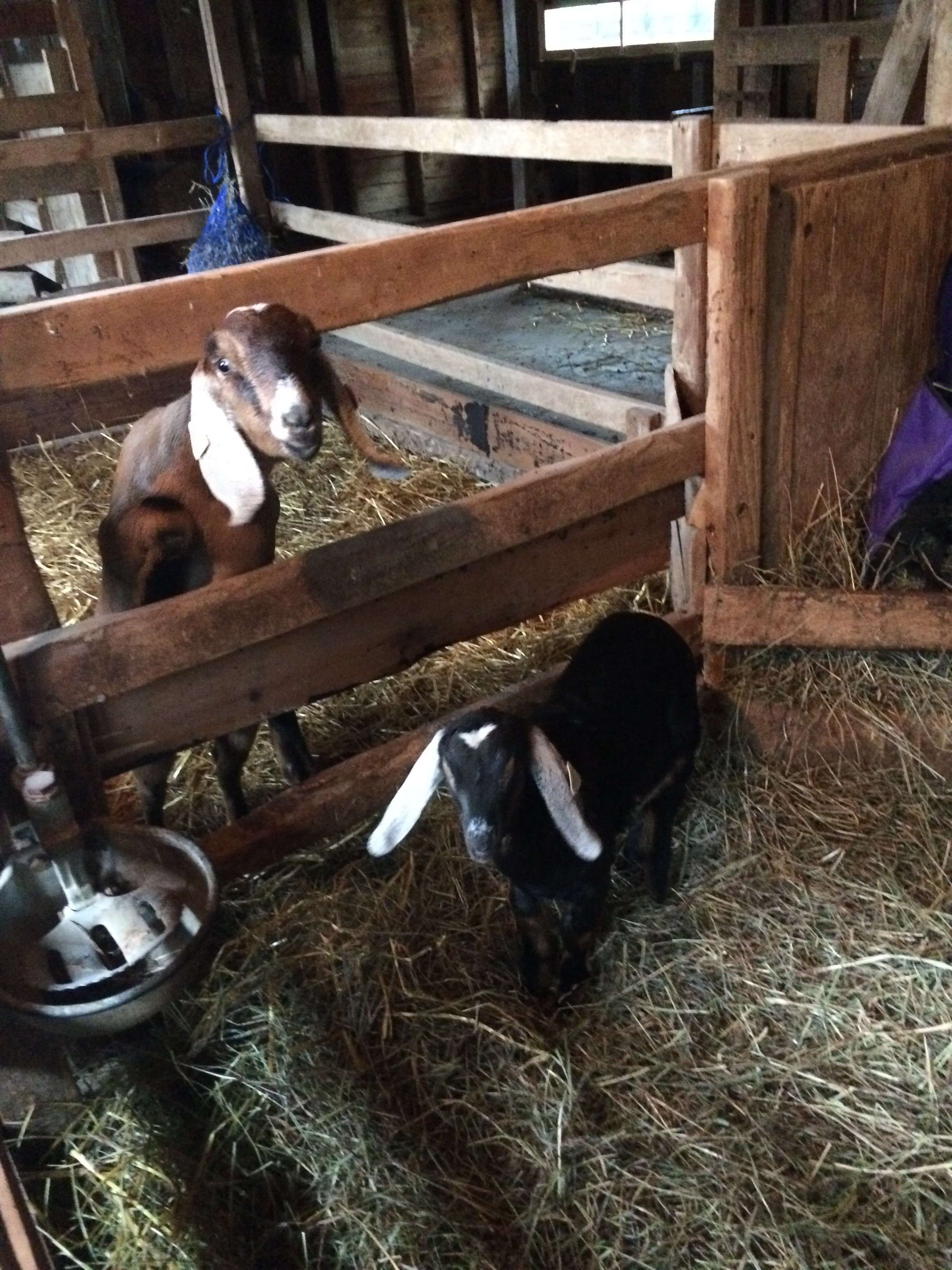
Plenty of room at the inn means we can say ‘yes’ to take in friend’s baby goats and rescue an abused cow from an animal hoarder. There is no greater privilege than being in the position to help.

Goats

~~~~~~~~~~~~~~~~~~

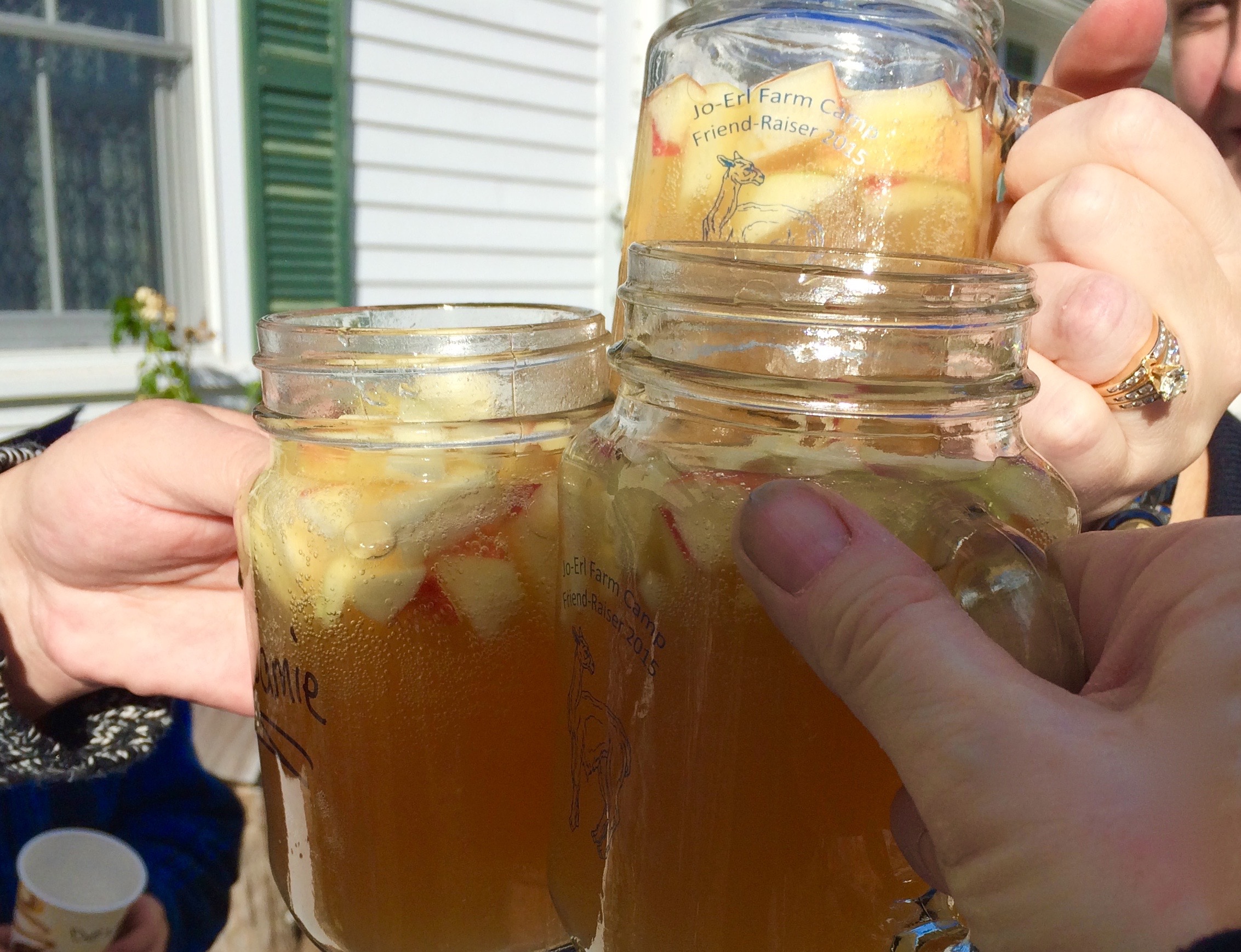
That people show up in a hundred different ways when we need help, from Evan Maietta and the farm campers, to local farmers, to handy friends, makes me appreciate the barn raising that modern living should be, but often is not.

IMG_9213 (1)

~~~~~~~~~~~~~~~~~~

Though the work is hard and the pay can be low, in the right light there is hardly anything more beautiful than kneeling in the dirt.

Photo by farm intern Anja Semanco, 2012.

Photo by farm intern Anja Semanco, 2012.

~~~~~~~~~~~~~~~~~~

Happy Thanksgiving from all of us at Jo-Erl Farm to you and your loved ones!

[jetpack_subscription_form]

Everywhere That Mary Went. . .

blackandwhitekarina.jpbby Laura Parker Roerden

When we first brought our lambs home, our plan was to pasture them with the cows. Cows and sheep have different foraging appetites, making their co-habitation in the pasture more efficient. Cattle are also great predator protection for sheep, aggressively attacking coyote and bonding with sheep within a two week period of time. Together they are considered a “flerd” —a conflation of herd and flock that is so silly it’s irresistible. Truth is we figured they would look like a real life Far Side cartoon in our pastures, with thought balloons fueled by coffee and written on the blank canvas supplied by winter.

But our lambs are still young and we want to keep a watchful eye on them for the winter, while they adjust to their new home. So we created a winter paddock, closer to the farmhouse and enclosed on all sides for warmth and protection from deep snow.

This week a small crew of farm camp kids (Ben, Zach and Sam) added finishing touches by painting the fence for the paddock, so a chicken wire apron could be installed.

BenPaintingZachPainting


SamPainting

Our handyman/carpenter Keith built a wonderful sheep door to the paddock, just their size. Or perhaps like Alice in Wonderland, it’s the world outside that has grown.

AtDoor

Just ask Juliette, as she ventures outside here at Jo-Erl Farm for the first time.

Julliette

At first Juniper and Juliette were curious about the sheep door when I opened it. But it wasn’t until I crawled through the door myself that they followed me outside to the new paddock.

Later as I walked around the area checking for hardware in the grass with a magnet roller, they strolled beside me, at one point Juliette making two full circles around me as she scanned the perimeter and I hummed a joyful version of “Mary Had a Little Lamb.” And I thought I was imagining the bleated answer to my “Good Morning” today as “MAAAAA.”

TogetherOutside

Come spring, we hope both Juniper and Juliette and their newborn lambs will  join the cows on pasture.

cows

[jetpack_subscription_form]

Yes, Sir. Yes, Sir. Two Bags Full!

7 Random Farm Happenings

by Laura Parker Roerdenblackandwhitekarina.jpb

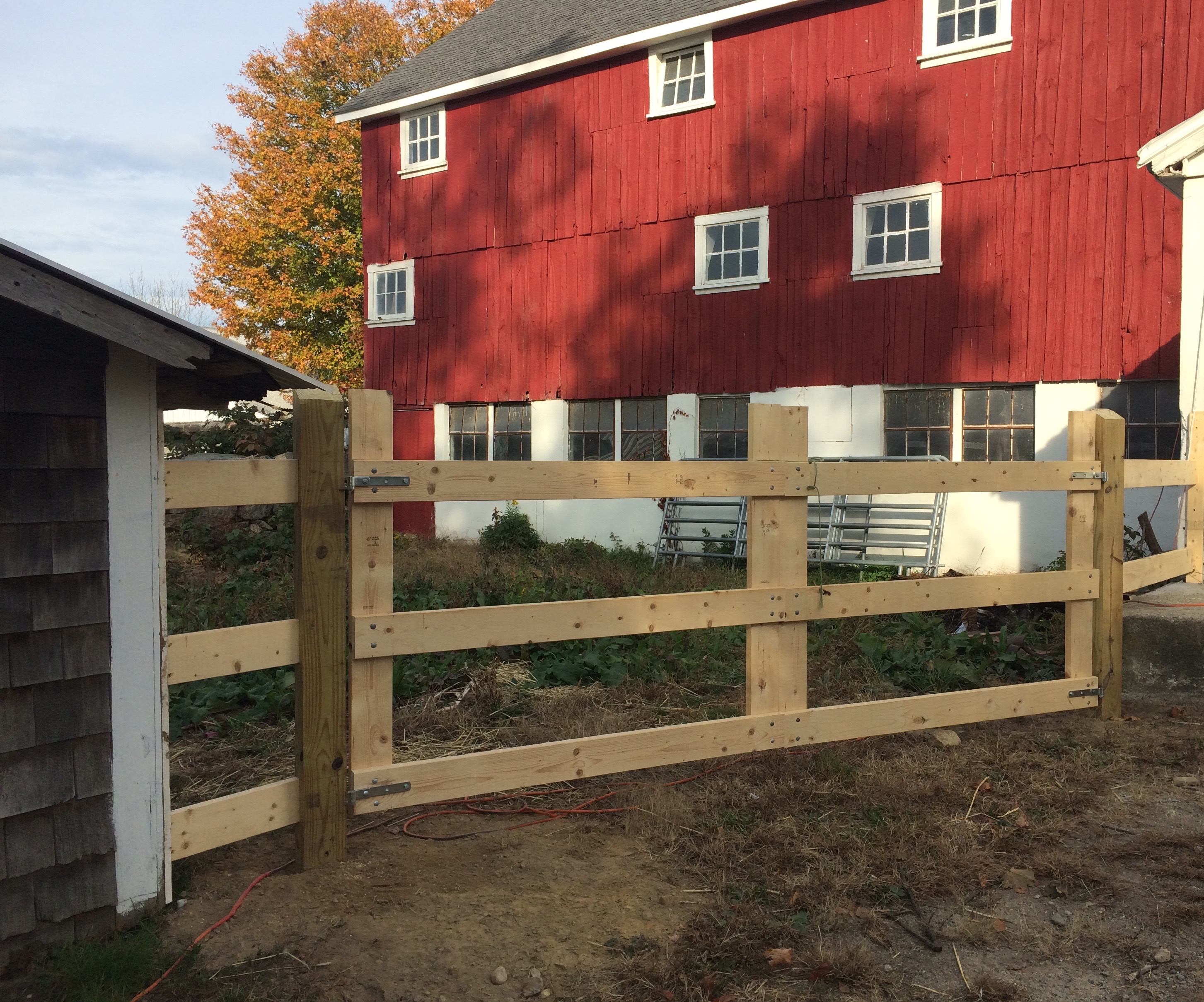
  1. Juliette and Juniper have added a lot of excitement to our lives here at Jo-Erl Farm. We’ve been busy getting a winter paddock ready for them, one that will be safe from predators and close enough to the farmhouse for us to keep an eye on them. This is the beautiful handiwork of our ever-versatile and talented carpenter Keith. We can’t wait to paint it white. Right, kids?

IMG_92332. This past Sunday, we had Juliette and Juniper sheared. Or, maybe they were shorn?  “Sheer, sheared, shorn.” Though it says on the official Sheep Shearing 101 site that it’s proper to use either sheared or shorn as past tense. Who knew?

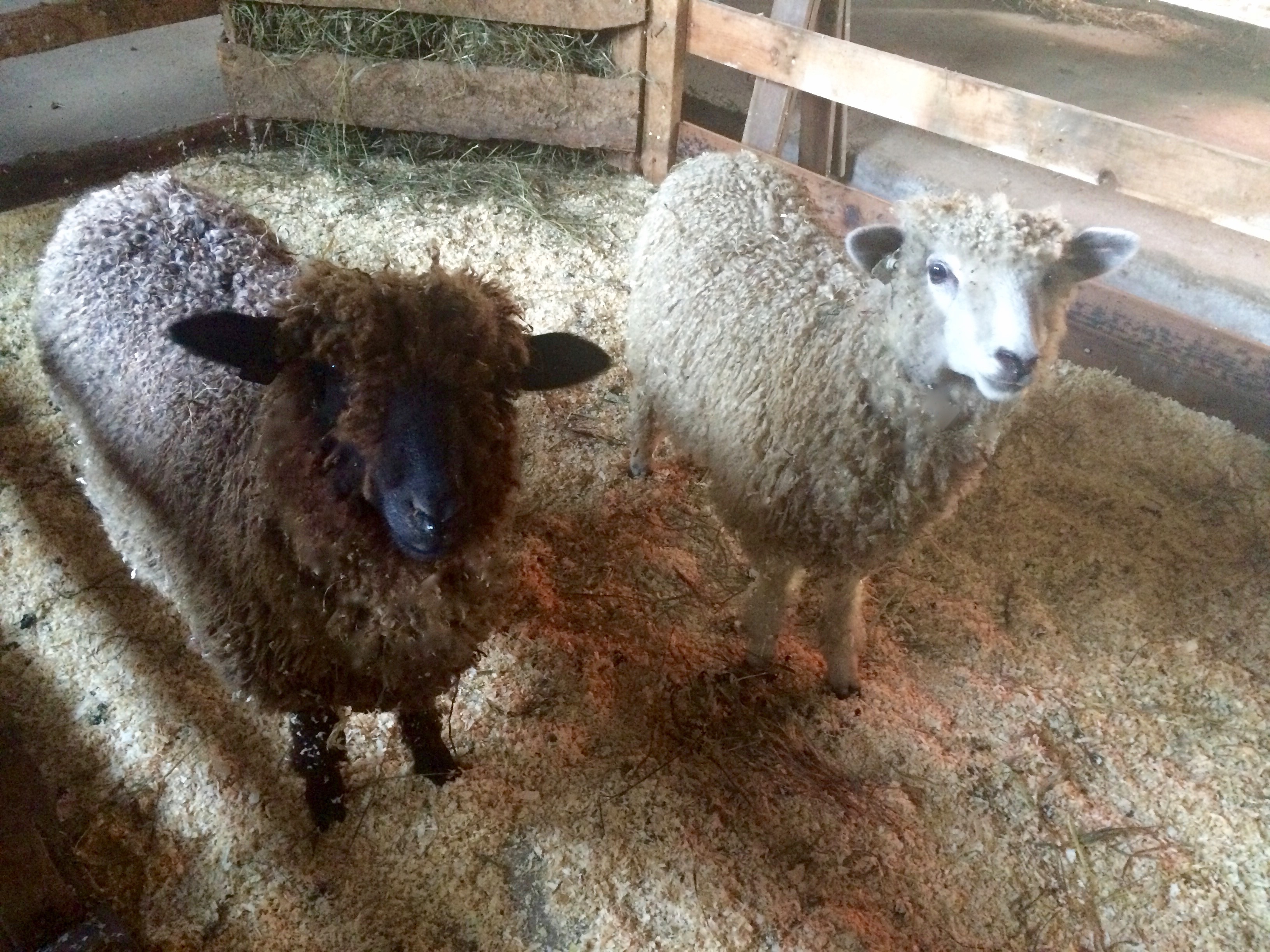
Here are the precious lambs before being sheared.

LAMBS (1)
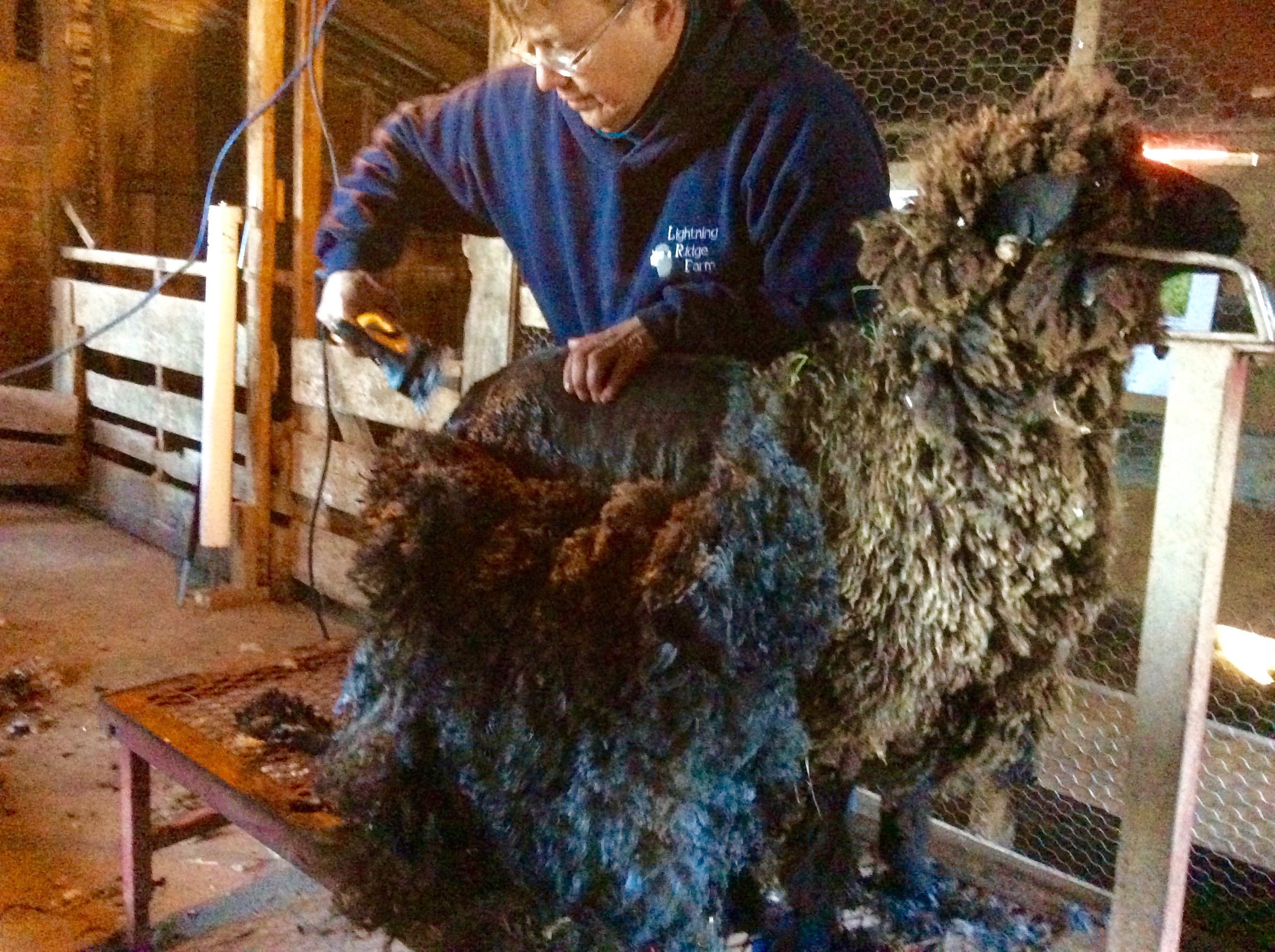
Here they are during shearing:

IMG_1049 (1)

Isn’t that table setup cool? The lambs seemed completely secure and comfortable throughout the process, many thanks to our skilled new friend Nancy from Lightening Ridge Farm in Sherborn, who volunteered to come out and help us hopeless novices with this important task.

Farmers helping farmers puts the love in this labor called farming.

Notice Junipers’ wool is bluish-black underneath. Isn’t it gorgeous?  The mocha-colored top layer of her wool was caused by bleaching from the summer sun.

Here is Juliette and Juniper shorn.

Shorn

We are all surprised by how tiny they really are underneath all of that wool. (Did that wool dress make me look fat? Of course, not! You were just fluffy.)

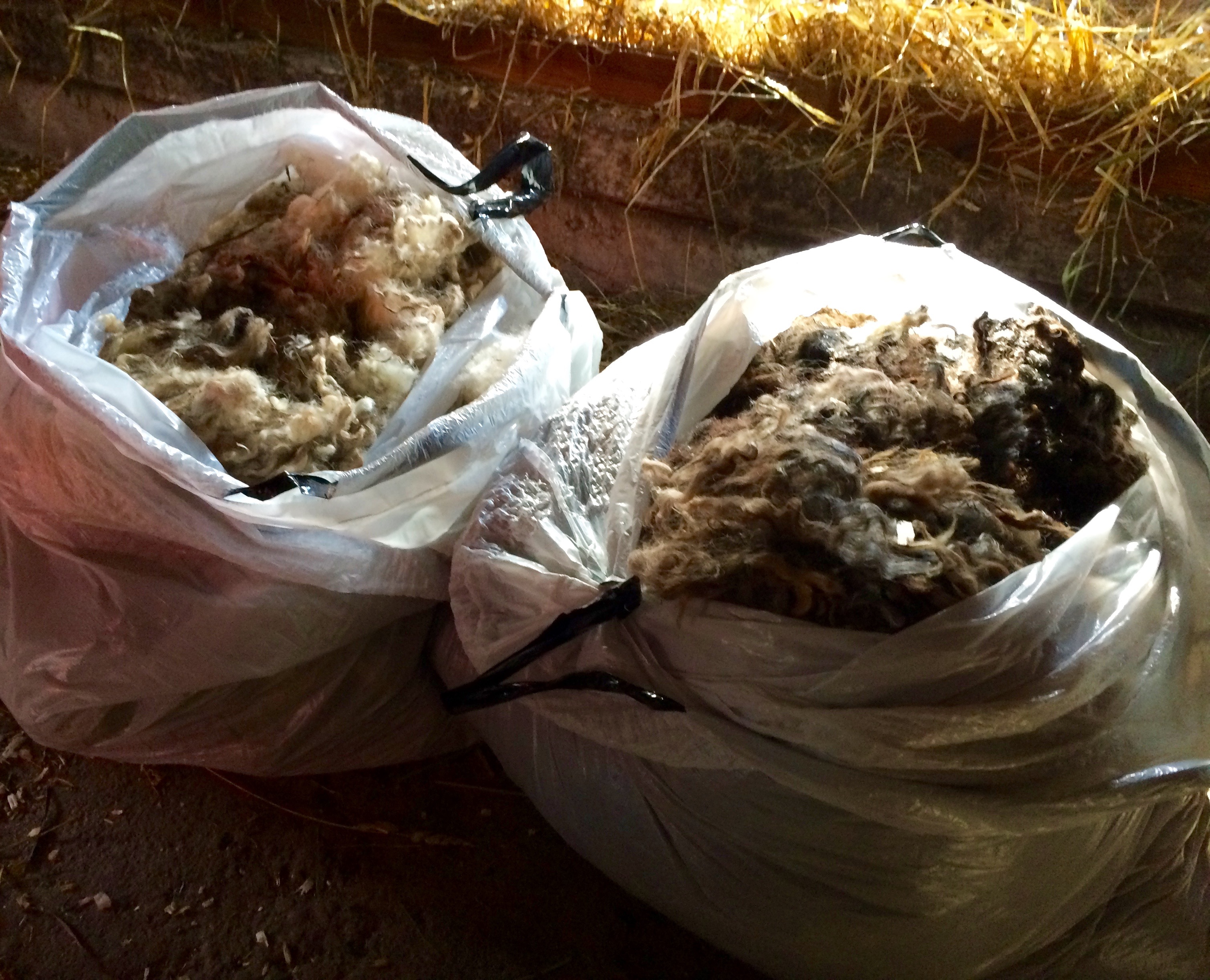
It turns out that two lambs can give you quite a bit wool: two bags full!

IMG_9227

Next up is washing the wool, spinning it, and dying it. We are dreaming of knitting projects for this coming winter and googling all sorts of felting projects and crafts for the Farm Camp kids.

3. Our annual Farm Camp Friendraiser was held this past weekend at the farm and was a huge success! Over 80 people participated and generously supported the Farm Camp Kids’ fund to purchase a flock guard llama to keep Juliette and Juniper safe from predators when on pasture next spring. Thank you to all who came out! We consider you family.

IMG_9213 (1)

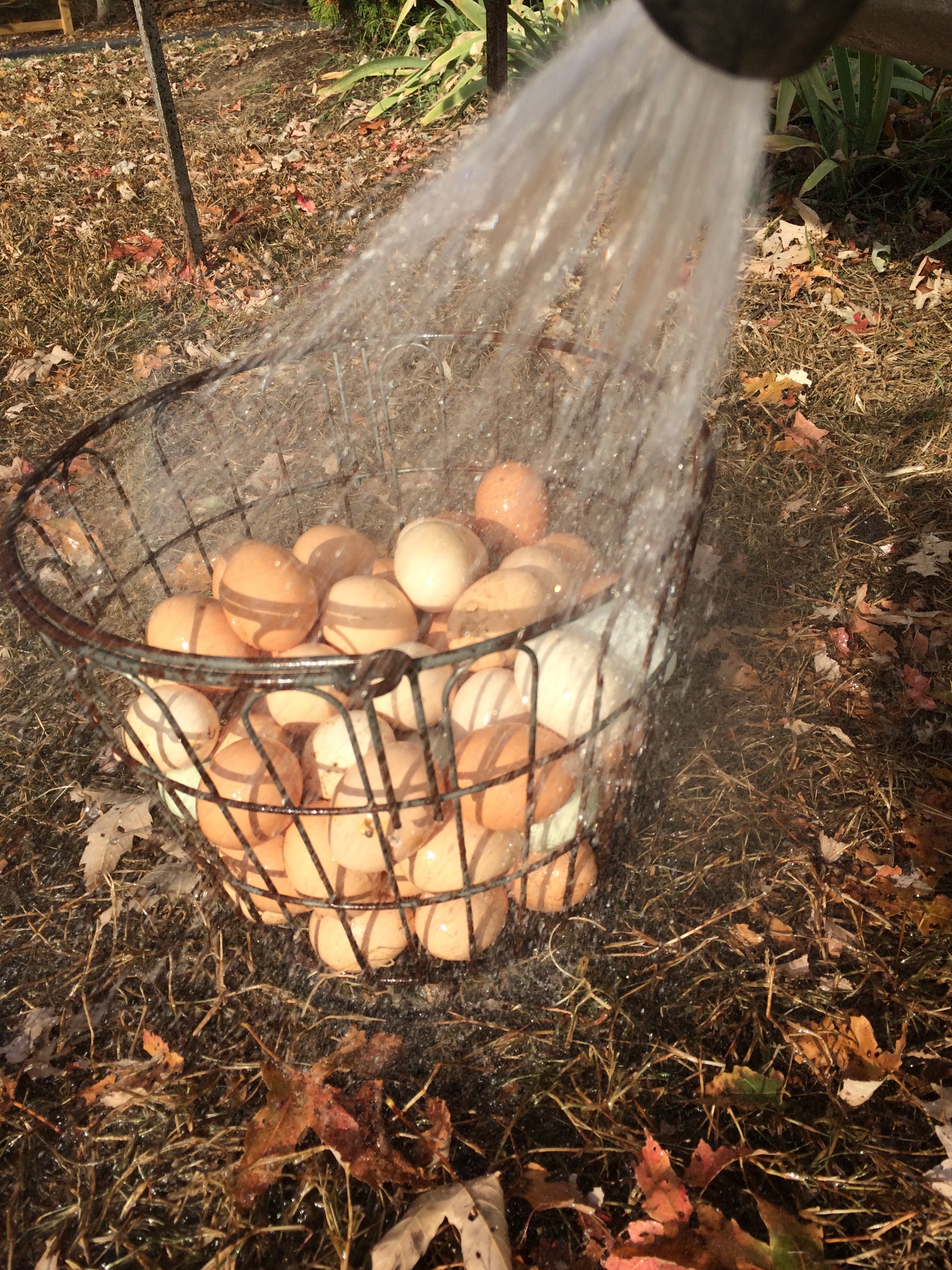
4. Sometimes tradition gets in the way of progress! As many of you know, back in the day my great-grandparents and grandparents ran the farm as a poultry named Fairview, for the wonderful views of the church steeples in the valley seen from our perch on West Hill. During those days, we’d hand wash the eggs, using water and wet rags as to not disturb the protective membrane that not only keeps the egg fresh, but keeps chemicals and bacteria from entering the porous membrane of the shell. We have continued to do it the same labor intensive way until this day.

Leave it to a kind-hearted neighbor to point out that I could much more easily pressure wash the eggs with a hose through the vintage wire egg baskets we still use from those early days of the farm. It now takes me seconds to wash eggs, a task that used to take hours. Thank you, Nicole Haker! We might not have a very automated farm, but I can safely say we’ve now at least entered the 20th century.

IMG_9235

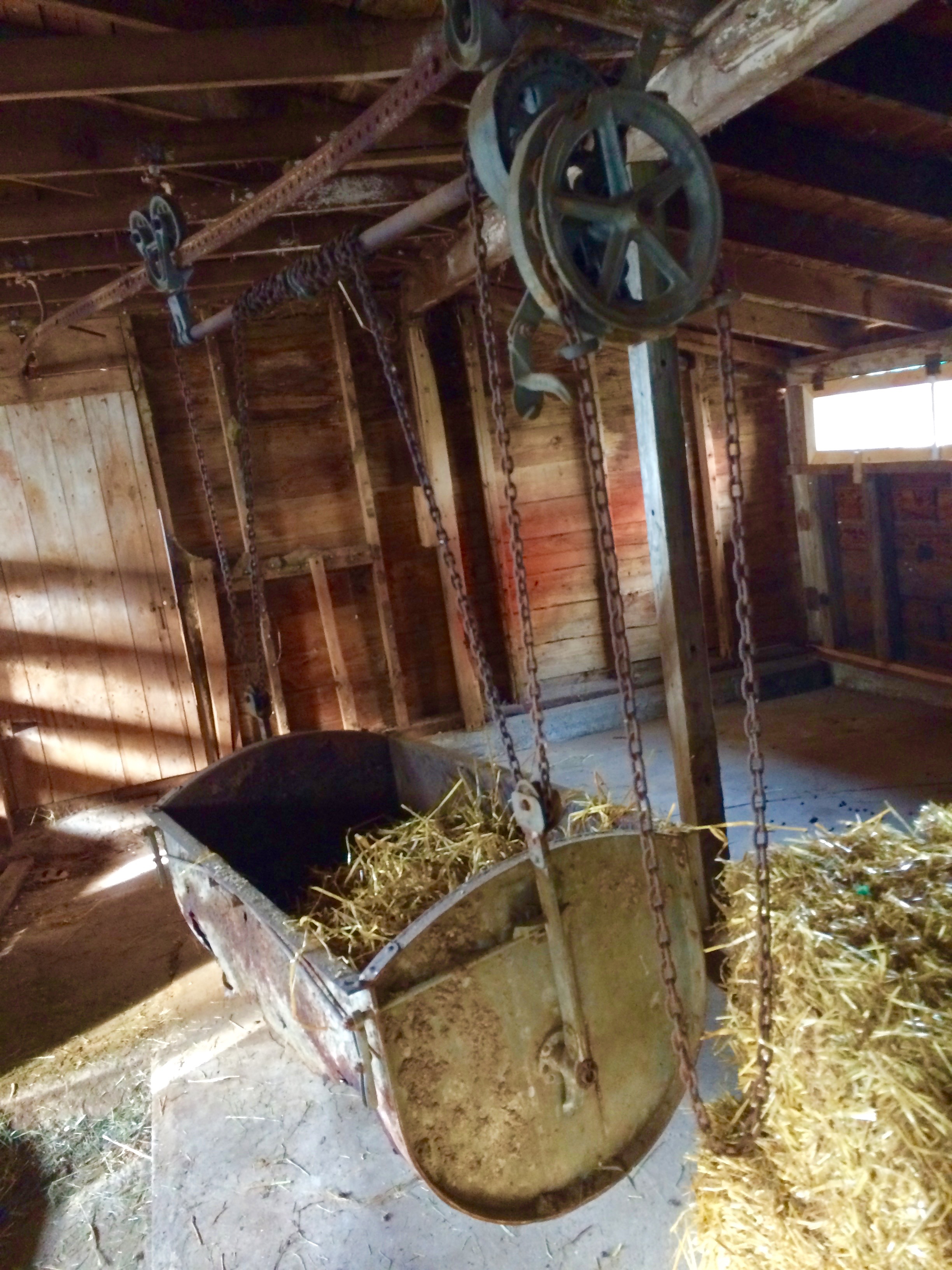
5. One benefit of restoring the calf barn for the sheep is that my father had already set up systems to make caring for small animals easier. One such system is this manure barrel, which makes mucking stalls a quick ten-minute chore. The barrel travels on a rail throughout the center of the barn, so that you can easily reach it with a shovel as you muck. The heavy load is then moved with a gentle push to a porch off of the back of the barn. A simple shift of a mechanism on the pulley and the barrel dumps the manure through a trap door in the floor. Thank you, Dad! So many of your gifts were like this: simple, yet true and everlasting.

IMG_9229

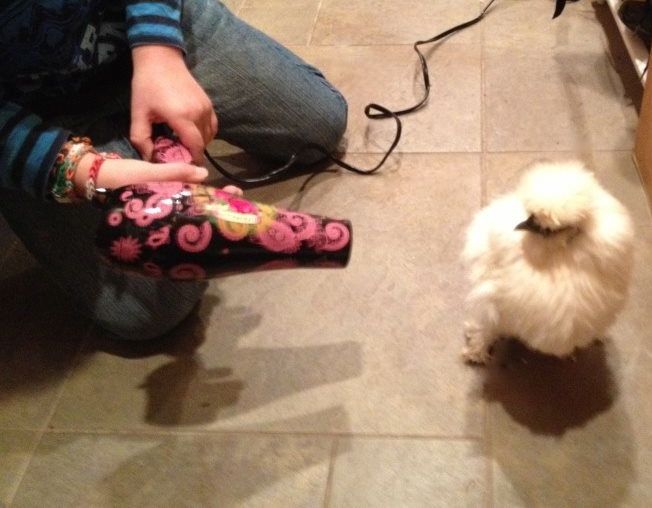
6. We are sorry to report that our beloved Farm Camp mascot Mucky, the white silkie chicken, died in September. Mucky was lain to rest in a private ceremony on the farm. We know Mucky’s special brand of magic will continue to inspire us, as has the kind gift of another white silky chicken from recently retired local teacher and farm girl Ruth Bandstra. The Farm Camp kids have lovingly dubbed our new silkie Un-Mucky.

mucky

7. And because we don’t want to leave you on a sad note, we are proud to report that our peafowl chicks are nearing the three month mark. They have grown crests and are wearing a necklace of iridescent greenish blue feathers these days. They have an air of mystery and prance regally though the barn or perch in surprising places. They remind me of vintage photos of travelers on cruise lines dressed in their finest, but frozen in a stance of being on their way to someplace else.

IMG_9270

[jetpack_subscription_form]

Moo-ving Miss Mezzie Into the Big Red Barn

By Evan Maietta, age 14

For those of you who follow farm camp, or anything Jo Erl Farm related for that matter, you have most likely heard of our beloved Jersey Mezzie. For those of you who have not heard of our farm favorite, Mezzie is our four year old Jersey dairy cow. She was rescued on Thanksgiving day 2011, when Laura got a call from animal control in an area town saying that she had an 8 month old cow that needed a good home; Laura’s generous brother Dave dropped everything to go pick her up.  It seems her previous owner was neglecting her basic needs. She was kept in a garage with some ducks and goats as her not-so-pleasant roommates.

Mezziepasture

This winter is very big for Mezzie. She will be having her first calf in a short amount of time… we think. It could be hours, days, or even weeks before the calf is born; we just know that when it does happen, we want to be prepared. The temperature forecasts for the next few days are how we say in New England, “wicked cold,” as in, nearly negative temperatures, even before you factor in the wind chill. Needless to say, we felt bad for our poor girl. Normally, if not bred, she would be fine in our free-stall barn with the other cows, coming and going as she pleases to the pasture, with a heated waterer and round bale feeder all set up for on-demand feeding. But a wet newborn calf exposed to the elements if born outside might be in danger.

Tonight we decided that the time was right, so we cleaned out the cozy and warmer side of the enclosed dairy barn in which we house the spring chicks. We swept the floor, washed out the food and water bins, and put down some fresh bedding so Mezzie and her baby can be cozy and warm in this frigid weather. We had a slight hesitation to even try to bring her in for the night, seeing as it was only Laura, myself, Zach and Ben working. But we figured that we might as well try and if it didn’t work we could enlist Ed’s help the next day.

We had a quick meeting, almost as fast as football players in the huddle, and put together the plan to action. I took Zach and Ben down to the free stall barn to distract the others while Laura stood inside the newly set up spot with a flake of hay, softly rustling the hay and calling Mezzie’s name, trying not to call the others along with her. At first we were all weary of the plan, thinking it wouldn’t work, but all of a sudden, Mezzie left the herd, walking toward where Laura was stationed. I quickly grabbed a handful of hay and walked calmly beside her, bribing her with the clump of hay so she would come closer to her new “five star hotel room.” Surprisingly, after I went in, she ran inside to snag the pile of hay laying on the barn floor.

Laura and I exchanged a quick glance and just by that look we both knew exactly what we were saying. I ran outside and around the side of the barn, over the rock wall, and to the door which Mezzie had just taken her last step into. I calm walked in and quietly closed the door behind me as to keep Mezzie in, but not stress her more than we needed to. Currently, Mezzie is kicking back and relaxing, munching on some hay, awaiting her baby to finally come. If I had to guess I’d say that we’re more excited/anxious/worried about this baby then Mezzie is herself!

mezziemanger

[jetpack_subscription_form]

12 Days of Christmas at Jo-Erl Farm

by Zach and Ben Roerden (ages 10 and 8)

(Sung to the tune of 12 days of Christmas)

On the first day of Christmas my true love gave to me a chicken in a haystack.

hiddeneggsLOTS

On the second day of Christmas my true love gave to me two Ford tractors and a chicken in a haystack.

tractor

On the third day of Christmas my true love gave to me three guinea hens, two Ford tractors, and a chicken in a haystack.

cows

On the fourth day of Christmas my true love gave to me four Hereford cows, three guinea hens, two Ford tractors, and a chicken in a haystack.

On the fifth day of Christmas my true love gave to me five sky lanterns, four Hereford cow, three guinea hens, two Ford tractors and a chicken in a haystack.

guineahens

On the sixth day of Christmas my true love gave to me six pizza pies, five sky lanterns, four Hereford cows, three guinea hens, two Ford tractors, and a chicken in a haystack.

highfive

On the seventh day of Christmas my true love gave to me seven broody hens, six pizza pies, five sky lanterns, four Hereford cows, three guinea hens, two Ford tractors, and a chicken in a haystack.

chickssmaller

On the eighth day of Christmas my true love gave to me eight pullet eggs, seven broody hens, six pizza pies, five sky lanterns, four Hereford cows, three guinea hens, two Ford tractors, and a chicken in a haystack.

On the ninth day of Christmas my true love gave to me nine farm-campers weeding, eight pullet eggs, seven broody hens, six pizza pies, five sky lanterns, four Hereford cows, three guinea hens, two Ford tractors, and a chicken in a haystack.

Mama Cow

On the tenth day of Christmas my true love gave to me ten Jerseys milking, nine farm-campers weeding, eight pullet eggs, seven broody hens, six pizza pies, five sky lanterns, four Hereford cows, three guinea hens, two Ford tractors, and a chicken in a haystack.

anjahaying

On the eleventh day of Christmas my true love gave to me eleven of Ed’s friends haying, ten Jerseys milking, nine farm-campers weeding, eight pullet eggs, seven broody hens, six pizza pies, five sky lanterns, four Hereford cows, three guinea hens, two Ford tractors, and a chicken in a haystack.

On the twelfth day of Christmas my true love gave to me twelve eggs a dozen, eleven of Ed’s friends haying, ten Jerseys milking, nine farm-campers weeding, eight pullet eggs, seven broody hens, six pizza pies, five sky lanterns, four Hereford cows, three guinea hens, two Ford tractors, and a chicken in a haystack.

hiddeneggs


[jetpack_subscription_form]


And the Weasel Strikes Again

by Laura Parker Roerden

blackandwhitekarina.jpb

We had an entire blessed week of quiet here on the weasel front. I no longer braced myself before I walked into the coop. We had stopped leaving the lights on all night. I had turned off the baby monitor. I had stopped walking the perimeter.

But this morning, after I fed the chickens, as an afterthought I looked behind the egg boxes and there it was: a headless aracauna chicken, a heritage breed from Chile. Aracaunas are among my favorite chickens. They are the ones that lay the bluish green eggs that look like paint chips or something you’d find in a fairy tale.

egg-752274_1280

Each aracuana hen is different. Some are speckled beige and black; others are reddish brown. This one that was the most recent kill was a heartbreakingly almost cerulean grey.

In that moment I wanted to be like Scarlett O’Hara and just close the door to the coop.

I can’t think about that right now. If I do, I’ll go crazy. I’ll think about that tomorrow.

But I didn’t.

Instead, I went inside the farmhouse. I took a deep breath. I maybe cried a little. I sent a pressing work email out about a book project. And then once again got back to examining the crime scene with our handyman Keith. We found paint chips and dust disturbed around an area of chicken wire that might provide about an inch of opening: likely the place of entry. We closed more holes.

I went back to the hardware store.

“Do you think the fox pee will work?” I ask the man in the paint department, who no doubt knows me as the weasel lady. “There’s no coyote pee left.”

“The coyote urine had opened all over the floor,” the clerk explained patiently. “We had to dispense of it quickly. It leaves quite the stench.”

“Yes,” I nod knowingly.

When did this happen? When did I begin spending mornings discussing the merits of various dehydrated urines?

I purchase the fox urine, feeling slightly more like Scarlet vowing to rebuild Tara as I leave.

Afterall, tomorrow is another day.

[jetpack_subscription_form]

Goodbye, Weasels!

by Laura Parker Roerdenblackandwhitekarina.jpb

Most games have a buzzer that goes off, signaling its end. Victory is declared for whomever is ahead at that moment. Life is not quite like that. Though, as my good friend and comedian Dana Gould once quipped, “What hasn’t killed you, isn’t finished with you yet.”

So, it’s with great caution that I announce that we’ve finally secured our chickens from the weasel(s). We could not have done it without the dedication of our handyman Keith, who not only spent two entire nights sitting in darkness in a cold barn staking the critter out, but also came every morning around 5 am for days in other attempts to secure the coop and to give me a chance to go to bed for a couple hours before I had to get up the kids.

As you know from following the posts here, this entire experience has been a barn raising, with so many friends and family showing up in so many ways. Showing up is one of the greatest gifts you can give someone. Even the texts from my friends asking, “How did it go?” or saying, “Take a nap” brought a certain feeling of security to me at a time when I at best felt like a failure and at worst felt under a certain siege.

These small problems in our lives, of course, happen in a backdrop of seemingly insurmountable societal problems. It’s been a crappy fall out in the world and in so many of the people I love lives. Every headless chicken lying in the mud begged me to try to make meaning of it.

I’ve tried not to take the bait. It’s just too big. The best meaning I can make at this time—in the wake of the Ferguson decision; in a world where the U.S. puts the most powerful climate denier in the senate in charge of our climate policy; in face of dear friends who are battling cancer, job loss, divorce—is that yes, sometimes it’s true that the fox (or in this case, weasel) is guarding the hen house. And we might not have the answers. Or feel like we have the words. But we need to show up, because it’s going to keep busting our butts if we don’t.

But since that doesn’t sound very Thanksgiving-ey,  I want to also offer this poem by Mary Oliver, who is better at making meaning from the world than I.

wildflowers
Our back pasture, reclaimed by the hard work of Ed Parker using heavy equipment for a solid week and our farm campers donning clippers and weeding for many, many days. Photo © Zophia Dadlez

Messenger
by Mary Oliver

My work is loving the world.
Here the sunflowers, there the hummingbird—
equal seekers of sweetness.
Here the quickening yeast; there the blue plums.
Here the clam deep in the speckled sand.

Are my boots old? Is my coat torn?
Am I no longer young, and still not half-perfect? Let me
keep my mind on what matters,
which is my work,

which is mostly standing still and learning to be
astonished.
The phoebe, the delphinium.
The sheep in the pasture, and the pasture.
Which is mostly rejoicing, since all the ingredients are here,

which is gratitude, to be given a mind and a heart
and these body-clothes,
a mouth with which to give shouts of joy
to the moth and the wren, to the sleepy dug-up clam,
telling them all, over and over, how it is
that we live forever.

Wishing you all the gifts of gratitude in our lives. And for the times when you can’t muster gratitude, the gift of showing up.

[jetpack_subscription_form]

Seven Random Things I’ve Learned from Weasels

by Laura Parker RoerdenStanding

The news on the weasel front here at the farm is not good. Despite the heroic efforts of just about anyone who would be on my desert island list because of their superior survival skills, the weasel is winning. Killing has escalated, no doubt because winter is approaching and weasels are notorious for building a food cache. I’ve entered the barn in the morning to find as many as four more birds dead in one wild spree.

Since this whole weasel incident started three weeks ago, we’ve tried everything. We’ve airlifted sentimental favorites to a safe house. We’ve chalk dusted the perimeter of the barn each night with hopes of revealing the animal’s entry point. I’ve stayed up all night with a baby monitor crackling near my head, (not) sleeping in my clothes, flashlight and shovel at the ready. We’ve set traps; arranged for ways to re-home the entire remaining 80 birds. We’ve positioned two different types of critter cams using our most recent intelligence on likely entry points. We’ve had a team of friends, my nephew Ed and niece Tracy, farm campers, and our trusty handyman Keith helping to find holes as small as two inches and cover them with chicken wire; each time we look finding new holes. Hey, I’ve even got an former Marine on our team, so we’ve got some pretty good moves in our arsenal despite our ineffectiveness to end the slaughter.

I don’t like to lose. I never have liked it, but that’s not the point. Three weeks of awakening to birds you have nurtured since chick-dom decapitated and splayed on the ground of the coop affects a person. In my sleep deprived state, here are a few random things I’ve learned.

1. Chickens are surprisingly silent many, many hours each night, though they nearly always percolate with a low level cooing that sounds like the lapping of waves coming in to a dock.

2. Several roosters together have a call and response pattern to their crowing that makes visible the end points in a coop. I am certain I could navigate that dark coop now, using only their crows for guidance as if listening for a fog horn navigating dangerous shoals.

3. Roosters wake up at 3:00 am in the morning. Really. That might be the real reason the weasel is killing: to make them stop.

4. Weasels are the LeBron James of the northeast woodland community. They have nearly supernatural capabilities. Built like torpedoes to fit through the smallest of holes (2 inches or smaller), they are still have strong and big enough jaws and teeth to snap off the neck of an animal several times bigger than they are.

5. Front row seats to predation has a way of complicating things. Yesterday, despite the fact that I needed to get the beef stew I had planned on making into the slow cooker as early as possible, I simply could not stomach cutting chuck roast into smaller bits. I instead went to the barn and fed our cows their hay; lingering with them and appreciating the wisps of steam snaking up from their noses into the cold, thin air as they ate.

6. We have the kindest friends, kids, family, farm campers, handyman, and tribe around us who have showed up in ways too numerous to even list. I’m pretty sure that weasel didn’t intend to remind me of this, but as we head into Thanksgiving I am grateful for this deepening awareness.

7. Sometimes what we see when we lift the veil is admittedly not very pretty. But if you are willing to walk the perimeter of the dark, torn edges you’ll find a never-ending stream of new holes where light still gets in.

[jetpack_subscription_form]


A Farm Family

farmheadshotby Laura Parker Roerden

We’ve had a couple challenging weeks here at the farm. A weasel has been getting into the chicken coop and biting heads off of our newly-raised heritage breed Delawares. Mornings I’ll enter the coop and cringe—another headless chicken lying on the ground, already stiff.

At first, I could joke about it. “It’s either Ozzy Ozbourne or it might be a weasel.” Or “The least they could do is pluck it for me, too.” I’m not laughing now.

One of the birds killed was the smallest of the flock and my youngest child’s favorite. Most days Ben would come off the bus, go to the barn, and come back to the house with this little Delaware in his arms: he called her Lucy. He sobbed when I told him I had found her dead. Ben and I buried Lucy in a driving, cold rain. He made his own little homemade cross to put on the grave.

We’re up to about twenty birds taken, despite five separate attempts by three different men at closing holes in our 18th century barn. “The place looks like Fort Knox,” my nephew Ed said just last week, when he showed up again to help solve the problem. That was three or five chickens killed ago. I’m not sure. I’ve lost count.

Our handyman Keith is here again today, closing up more holes, investigating the crime scene, dusting for prints. It can feel discouraging, like playing Whack-a-Mole. Solve one problem on a farm and another surfaces.

Yesterday, I had our trusty Farm Campers here (ages 8-14), helping to close up more holes and restore order to the coop. Two of the eight year old boys found over seventy eggs hidden among the hay bales for the cows.  We laughed as the eggs in the pail mounted as more and more clutches were found: one clutch on the top of the bales; another between two bales; a third beneath the second and then a fourth in a nest of hay on the ground. I think we all have a soft spot for renegade hens, who make their own way in the world.

hiddeneggsLOTS

The Farm Campers left the barn last night confident, having safely tucked the chickens in for the night and turned off the lights.  We felt ready for our next challenge, discussing over dinner the lambs we were planning to purchase in the spring and the llama we thought it prudent to procure as a guard animal.

And then BAM, I found another bird this morning behind the nesting boxes, headless, when I went to the barn to feed the cows. Most of the time, I take these setbacks in stride. But this morning, I just couldn’t. I fell apart, my entire body heaving with tears, a new wave of grief about my father and my brother Dave’s passing washing over me. This sort of thing would have never have happened on their watch, I realize, and fresh sobs come. Grief is just like that weasel, finding holes to squeeze through.

Once I had calmed and disposed of the bird, I sent out a text to my gang: my nephew Ed, the farm camp manager Evan, our handy man Keith, my co-farm camp leader Yvette and within moments offers of help came in. One would find a critter cam; another was on his way with a hammer; and a have-a-heart trap was being procured. It can be amazing, just like that, too, this thing called farming.

My tasks for today included sorting through pictures of our recent Farm Camp Friend-raiser, which we held Columbus Day weekend. The Farm Campers, ages 8-16, had pulled off a wonderful afternoon and evening at the farm, complete with old fashioned games like sack races, donut-on-a-string eating, and egg ‘n spoon races; seasonal treats like maple sugar cotton candy and home-made baked goods; tractor pictures; a BBQ; a chance to feed the animals; songs by the bonfire; and an ending paper lantern ceremony with over 80 wonderful friends and family in attendance.

Potatosack

cottoncandyfiretractor

In doing so, they had raised enough money to buy their very own lambs so that they could learn how to run a farm micro-business.

As I opened and edited pictures, my heart filled with gratitude and a sense of a different kind of farm family, the kind that Evan Maeitta referred to when he surprised me with this, “We’re not just farm hands, we’re a farm family” on the back of the Jo-Erl Farm Camp t-shirts.

Yes, it’s true we’re a fifth generation family farm. But we’re also a farm family, the kind that sings around a bonfire, roots out hidden eggs, and does our best to keep weasels at bay.

highfive

The Jo-Erl Farm Camp is currently taking new members, ages 8-18 (meeting on Thursdays after school). There is no fee for being a part of Farm Camp, but the kids do run fundraiser here and there to fund their special projects. Farm Camp is currently selling two fabulous items.

mugs

bagsOwn a Jo-Erl Farm Camp sourvenir mason jar mug (16 oz.) or a grain bag tote bag, each for $10.00. The grain bag totes feature different animals and are a wonderful solution to mounting grain bags that can not be recycled.

Just leave a message here if you’re interested in purchasing either with your email address and we’ll be in touch.

Please consider yourself part of our farm family.

[jetpack_subscription_form]


A Day in the Life of a (Part-time) Farmer

farmheadshot

by Laura Parker Roerden

5:30 am (May 8, 2014).  I’m awakened by my cell phone ringing and the accompanying chime of a left voicemail message. It’s the post office calling: they have my forty baby chicks. The ones that were not supposed to come for three weeks. (Who knew that the post office opens at 5:30 am?)

I head to the barn and feed and water the grown chickens and the thirty, four-week old chicks, who now have their pin feathers and no longer require a heat lamp.  If you listen here you’ll notice the sounds of farming are not unlike those you hear in a restaurant kitchen. Grains are spilled, cascading notes of aluminum and steel clash, voices compete for real estate.

I collect the eggs, separating the warm-to-the-touch ones so that I can notify a customer that the fertilized eggs she wants for incubation are ready are to be picked up. In a modern twist, I text her a simple message: “12 eggs, warm to touch.” Like a summoned midwife, she replies: “I’m on my way.”

My nephew Ed Parker comes into the barn to feed the cows. His head nearly brushes the low ceiling as he stands with a rubber pail full of grain and we talk over the timing of CSA beef deliveries and the awaited cash flow. He heads into the free-stall barn. I can see through the still open door the crowd of expectant cows’ faces awaiting him.

The brooder needs to be cleaned for the new chicks now surprise arrival, so I grab a shovel and wheelbarrow. When people picture farming, they no doubt picture sunrise moments of planting seeds and feeding animals. But the unromantic truth is: farming is 90% poop removal. I hastily prop the brooder door open with the nearest thing available—a hammer. In the middle of this most odious of tasks, my cell phone rings: it’s the post office again. Yes, yes, yes. I’m coming.

In the confusion of grabbing my cell phone, the hammer falls and a two foot line of chicken wire scrapes my face from forehead to chin as the brooder door slams shut on my hand. Fortunately, there is no mirror in the barn, but I imagine I look like someone who has had a run in with a rake. This particular injury must remind me of childhood, because I swear I smell the iodine that my mother would have used on such a wound. I run my fingers over the jagged cuts and wonder if it will leave a scar.

Ed finishes feeding the cows, then heads to the post office to retrieve the chicks, so I can be on site to finish the brooder and sell the fertilized eggs to the woman who is on her way. I hide my face behind my hair so as to not have to explain what just happened.

box
The box the chicks were shipped in.

The woman arrives and introduces herself; we shake hands, and I hand her the dozen of eggs I have kept warm in the sun. She hands me the money and tells me about her children, grades 7 and 4, and how excited they are to be hatching their own chicks. She had confessed to me when we spoke on the phone earlier that they had lost their previous backyard chickens to predators, but there is no mention of anything in this encounter but the counting of days to the coming of new life.

The handyman who is preparing our Big Red Barn for a paint job shows up and we exchange “good mornings” as he gets to work on the historic windows that need puttying. Swallows, bees, and squirrels are already abuzz around his worksite protesting the disturbance.

windows

I call the local grain store to make sure that they have finally gotten in the fifty pound bags of chick crumbles that they didn’t have over the weekend; then head off to gather 200 lbs of grain.  I arrive to find the feed store manager turning over his 10 x 20 garden by hand. With a shovel. He is already soiled in sweat and happy to stop to help me. We chat casually about peacocks and a local man who made some good money selling them.

A big cattle rig from a local farm pulls up as I finish paying for my order. The son of a farmer who my father taught how to dairy farm hops out of the cab of the pickup after having perfectly backed it into the space where the hay will be loaded on. I think of my own seven-year old son, who plays with a miniature rig of this very kind and his own backing into imaginary adventures on the floor of our farmhouse.

rig

Now it’s back to the barn, where Ed has already settled the chicks into the brooder. “How many were dead?” I ask. “None,” Ed answers. Without another word between us, Ed unloads the grain I have just bought, I grab the chick waterer and food tray and fill them. He’s off to his next thing before I come back with the water.

I put the waterer in the brooder and touch the water with my fingers and bring a single bead to the beaks of one chick after another. The chicks come to the waterer like a magnet drawn north. I indulge in a few moments of touching the birds, knowing that their imprinting on me will help in the coming free ranging, as they learn the confines of their world as drawn by the comings and goings of their surrogate parent.

Black australops are heritage breed chickens.

I next prepare a  beef share for later delivery to Boston, where errands related to my other job and time with dear friends await. I leave notes for the children, who will later check on the chicks and close up the bigger chickens for the night. Good night, great green field, I whisper as I drive away.

[jetpack_subscription_form]